In healthcare, safety is often measured by what goes wrong—falls, incidents, injuries, and readmissions. These metrics matter, but they don’t always capture the full picture of how patients experience care on a daily basis.
Increasingly, healthcare leaders are recognizing a quieter but equally important indicator of safety: patient confidence. How secure patients feel when moving, sitting, standing, and repositioning themselves directly impacts behavior, and behavior directly impacts outcomes.
As hospitals and clinics continue to focus on fall prevention, mobility, and patient experience, confidence is emerging as a meaningful, preventative safety metric.
Why Patient Confidence Matters in Everyday Care
Patient confidence influences nearly every interaction within a care environment. When patients feel unsure of their footing or uncomfortable using furniture and equipment, they may hesitate to move at all or take risks they otherwise wouldn’t.
Low confidence can lead to:
Sign up to get the latest industry news and offers right in your inbox
- Avoidance of movement, which can slow recovery
- Increased reliance on call buttons for simple tasks
- Attempts to transfer or reposition without assistance
- Heightened anxiety during routine activities
Conversely, when patients feel supported and stable, they are more likely to participate in their care safely and intentionally. Confidence encourages appropriate movement, smoother transfers, and better engagement with care teams.
How the Care Environment Shapes Patient Behavior
Patients are constantly reading cues from their surroundings, often without realizing it. The design of a patient room—its layout, lighting, and furnishings—communicates whether a space feels safe and manageable.
Seating plays a particularly important role. Chairs that feel unstable, difficult to enter, or confusing to adjust can introduce hesitation. Patients may brace themselves unnecessarily, avoid sitting altogether, or rely more heavily on staff for tasks they could otherwise complete with partial independence.
On the other hand, when seating feels grounded, intuitive, and supportive, patients move with greater assurance. This sense of confidence reduces fear-driven behavior and supports safer participation in daily care routines.
Seating as a Critical Touchpoint in Patient Safety
In general patient rooms, seating is one of the most frequently used pieces of equipment. Patients sit to eat, visit with family, receive care, and rest outside of bed. Because of this constant interaction, seating design has an outsized influence on confidence and safety.
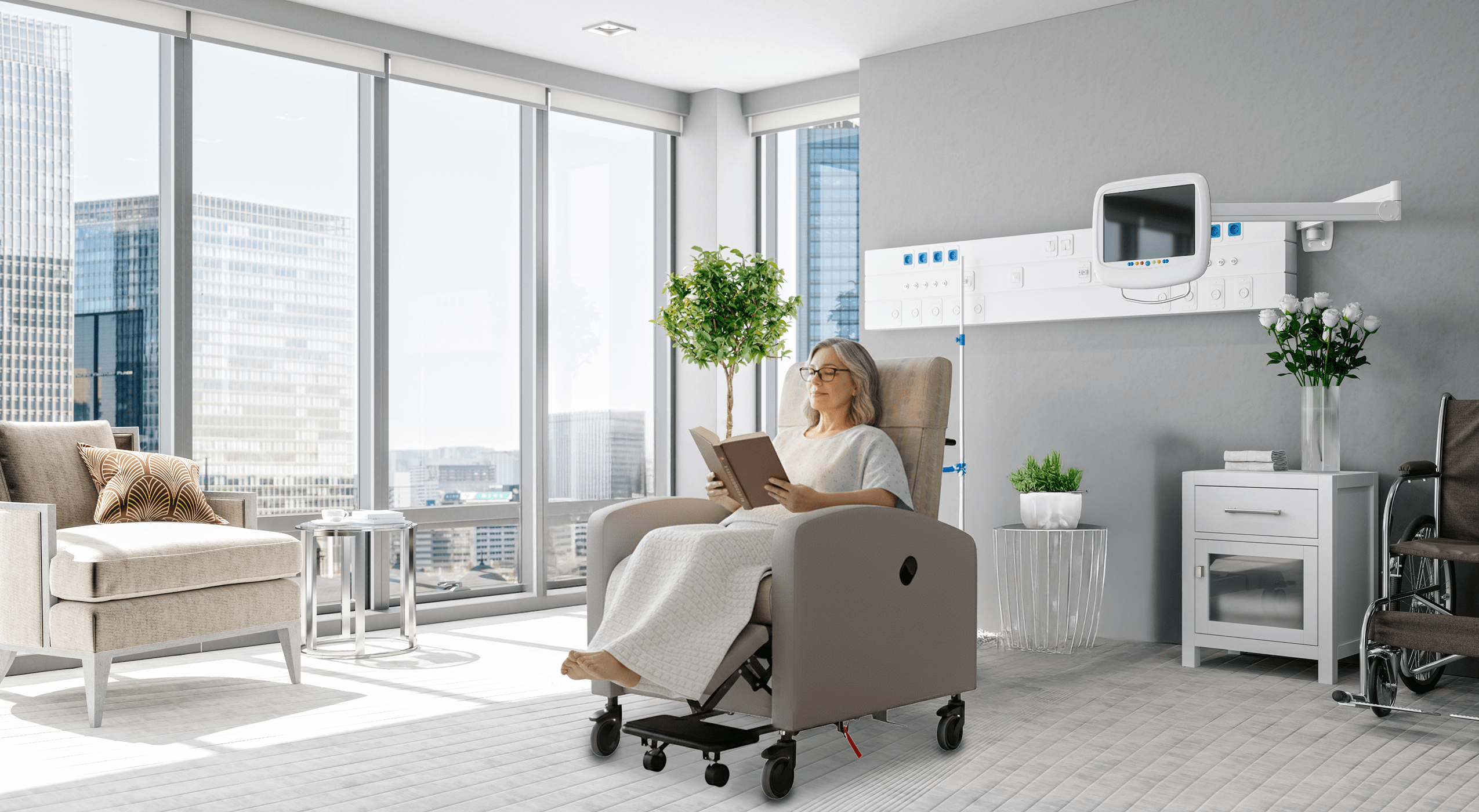
Key seating characteristics that support patient confidence include:
- A stable base that feels secure when sitting or standing
- Smooth, controlled movement that doesn’t feel abrupt
- Intuitive controls that are easy to understand
- Clear arm support for leverage during transfers
- A design that encourages independence without sacrificing safety
When these elements are present, patients are more likely to trust the chair and trust their own ability to use it safely.
Confidence Benefits Care Teams, Too
Patient confidence doesn’t just improve the patient experience; it also supports care teams. When patients feel secure:
- Transfers are more predictable
- Assistance needs are clearer and more consistent
- Rushed or reactive interventions decrease
- Staff strain during repositioning is reduced
Confidence creates a calmer care environment for everyone involved. Instead of responding to uncertainty or hesitation, clinicians can focus on planned, intentional care. Over time, this contributes to better workflows and fewer high-risk moments.
Measuring Confidence as a Preventative Safety Indicator
While patient confidence isn’t tracked on a dashboard in the same way as falls or injuries, it shows up indirectly across multiple performance indicators.

Hospitals may see its impact reflected in:
- Reduced fall risk and near-miss events
- Improved patient satisfaction and experience scores
- More consistent mobility and participation in care
- Smoother workflows for nursing staff
As healthcare continues to shift toward proactive safety strategies, confidence is increasingly seen as a leading indicator—one that helps prevent issues before they occur rather than react after the fact.
Designing for Confidence Is a Shared Responsibility
Supporting patient confidence isn’t solely the responsibility of clinical staff. It’s also a design responsibility. The physical environment should reinforce safety and stability at every interaction point.
Thoughtful seating choices can quietly but powerfully shape how patients feel in a space. When furniture supports confidence, safety becomes part of the environment, not just a policy or protocol.
Supporting Patient Confidence With Thoughtful Seating
In general care settings, seating plays a direct role in how confident patients feel moving, sitting, and standing throughout the day. A chair that feels unstable, difficult to adjust, or hard to exit can introduce hesitation and increase risk during routine moments.
The Inverness medical recliner is designed to support patient confidence through stability and intuitive use. Its grounded feel, supportive arm structure, and straightforward adjustments help patients move more deliberately while still allowing caregivers to step in when needed. Rather than forcing independence or dependence, the Inverness supports safer participation in everyday care.
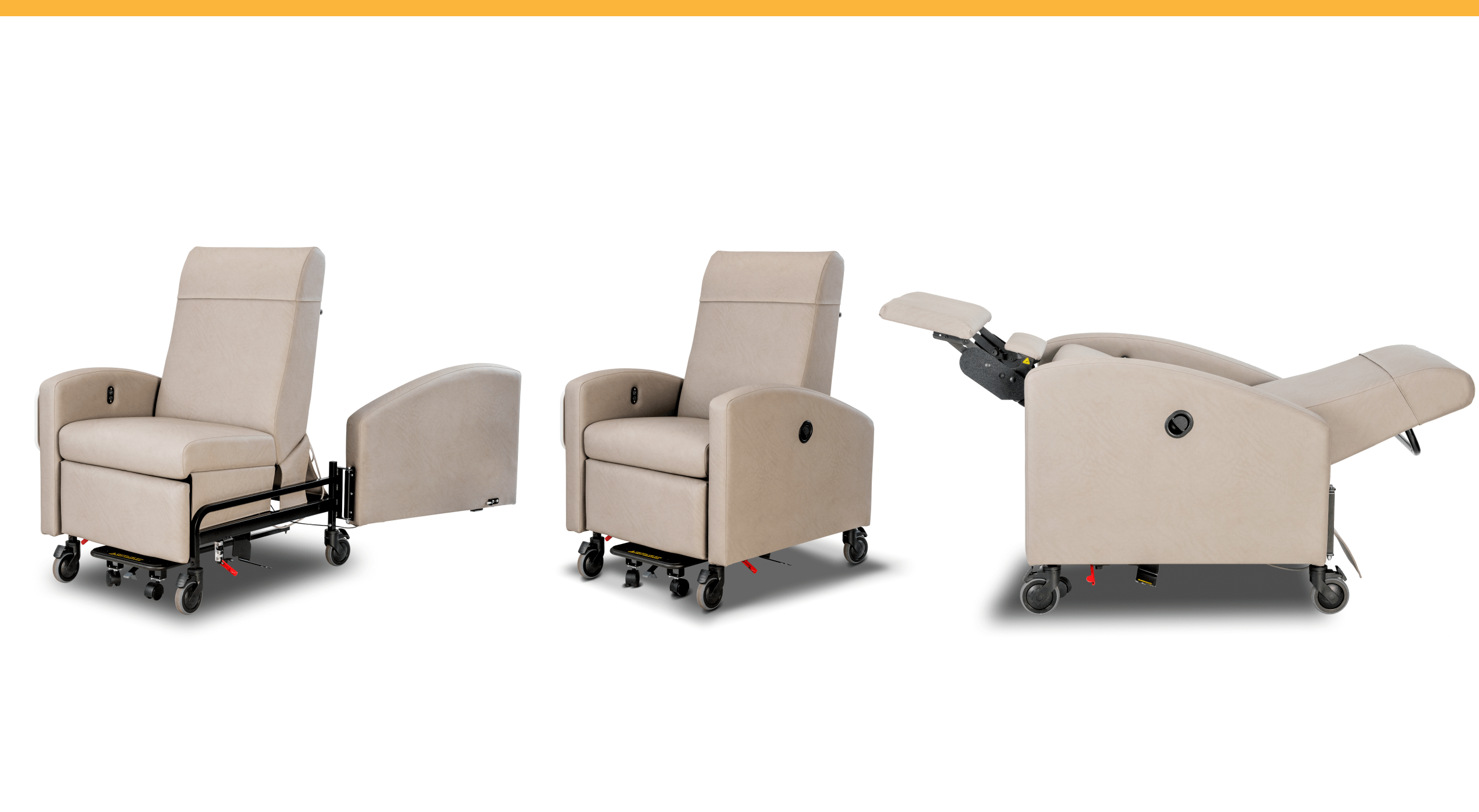
When patients trust the chair they’re using, they move with more assurance, and that confidence becomes a foundation for safer outcomes across the care environment.
Connect with a Champion team member or use our virtual configurator to design the Inverness, or any of our medical recliners, to fit your patient rooms today!