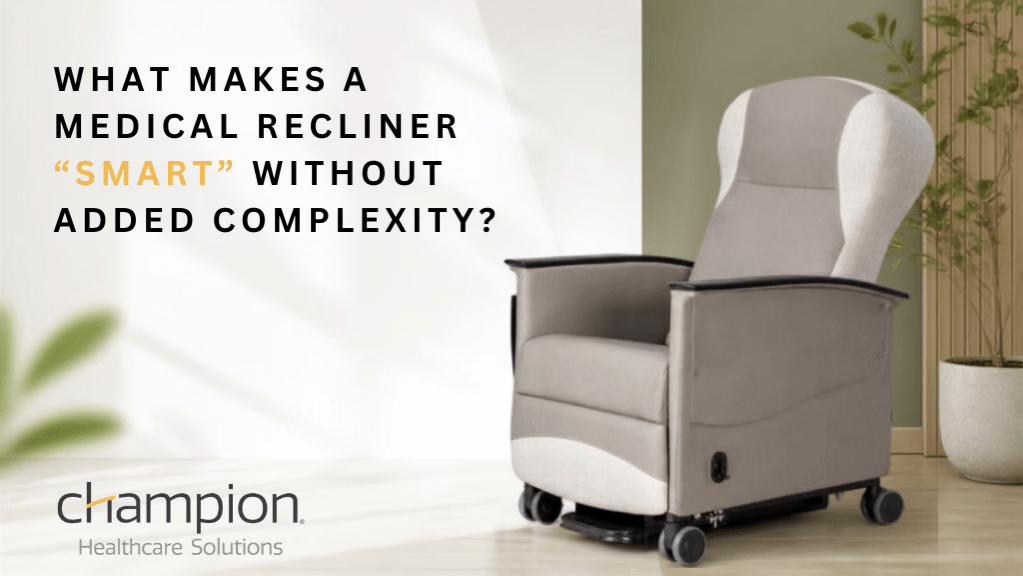
In an increasingly AI world, the phrase “smart seating” can easily become overcomplicated. It may suggest systems, dashboards, integrations, alerts, or advanced connectivity that sound impressive but may not match the everyday needs of a patient room, treatment bay, or recovery area. For many healthcare organizations, the highest-value seating innovation is more direct: a dependable recliner that helps patients find and maintain comfort with less effort.
This is good news for patients and providers.
While it’s true that patient recliners market analysis reveals sustained demand in healthcare seating, “smart” does not have to mean more complexity for facilities teams or more learning curves for caregivers. It can mean intuitive controls, smooth powered movement, supportive positioning, and thoughtful ergonomics that meet patients where they are.
This focus on ergonomic and adaptive healthcare seating reinforces the value of designs that respond to patient needs without overcomplicating the environment. The best technology in a healthcare chair should feel almost invisible. It should make the experience easier, not harder.
For patients with limited strength, fatigue, pain, restricted mobility, or temporary weakness, powered comfort controls can make a meaningful difference. Instead of relying solely on body movement or caregiver assistance, the patient can easily make incremental adjustments on their own. This level of independence can support confidence and reduce the frustration that often comes with feeling physically limited.
Features that make powered medical recliners relevant without making them feel over-engineered are key. The technology is there, but it is not the story. The story is the patient who can sit up to speak with a clinician, recline when treatment becomes tiring, or make a subtle adjustment without waiting for someone else to notice discomfort.
Patient-First Medical Recliners Help Preserve Dignity

Dignity in healthcare is often created through small details. Privacy,
communication, cleanliness, safety, and responsiveness all matter. Seating matters, too. A chair that supports easier repositioning can help patients feel less exposed, less dependent, and more in command of their immediate surroundings.
Patient agency is especially relevant in environments where patients may need to transition between intake, treatment, waiting, rest, and recovery. A recliner that allows a patient to shift from upright engagement to a more relaxed position can support both clinical care and personal comfort. It gives patients a way to manage their own presence in the room: alert when they want to speak, supported when they need to rest, and comfortable when time in the chair extends for long periods of time.
This kind of independence is not about replacing caregiver support. It is about preserving patient choice wherever possible. In a setting where many decisions are necessarily guided by clinical protocols, giving patients control over their seating position is a simple but powerful way to reinforce respect. Healthcare furniture trends support the intentional creation of flexible, patient-centered spaces that offer control and comfort without sacrificing care.
For caregivers, patient-first seating can also support the flow of the room. A recliner that helps patients reposition themselves for comfort may reduce some of the small, repeated adjustments that interrupt clinical work, while keeping caregivers central to safety, support, and treatment delivery. In this sense, patient agency and caregiver workflow are not competing priorities. The right medical seating can support both.
Comfort, Confidence, and Better Health Outcomes
No chair can promise a clinical outcome by itself. Recovery is complex and depends on the patient, the condition, the care team, the treatment plan, and many other factors. But the care environment can either support or strain the patient experience. Comfortable, adjustable seating can be one supportive element in a broader patient-centered environment.
When patients feel more comfortable and more in control, they may be better positioned to engage with care instructions, remain settled during treatment, rest more effectively, and communicate their needs. This matters because patient engagement and confidence are linked to care quality, adherence, satisfaction, and health-related outcomes. Comfort does not replace clinical care, but it can make clinical care easier to receive.
For healthcare leaders, this reframes the value of powered patient-comfort controls. The question is not simply whether a recliner has an advanced feature. The question is whether that feature helps patients participate more fully in their care experience.
- Does it reduce avoidable discomfort?
- Does it support longer periods of use?
- Does it help patients feel steadier, calmer, or more independent?
- Does it make the room feel less clinical and more human?
For decision-makers comparing medical recliners, the takeaway is straightforward: Evaluate patient seating by the problems it solves, not by the complexity it adds. If a feature helps patients feel more comfortable, more capable, or more independent during care, it has a clear purpose. If it adds steps without improving the patient or caregiver experience, it may not be the right kind of smart.
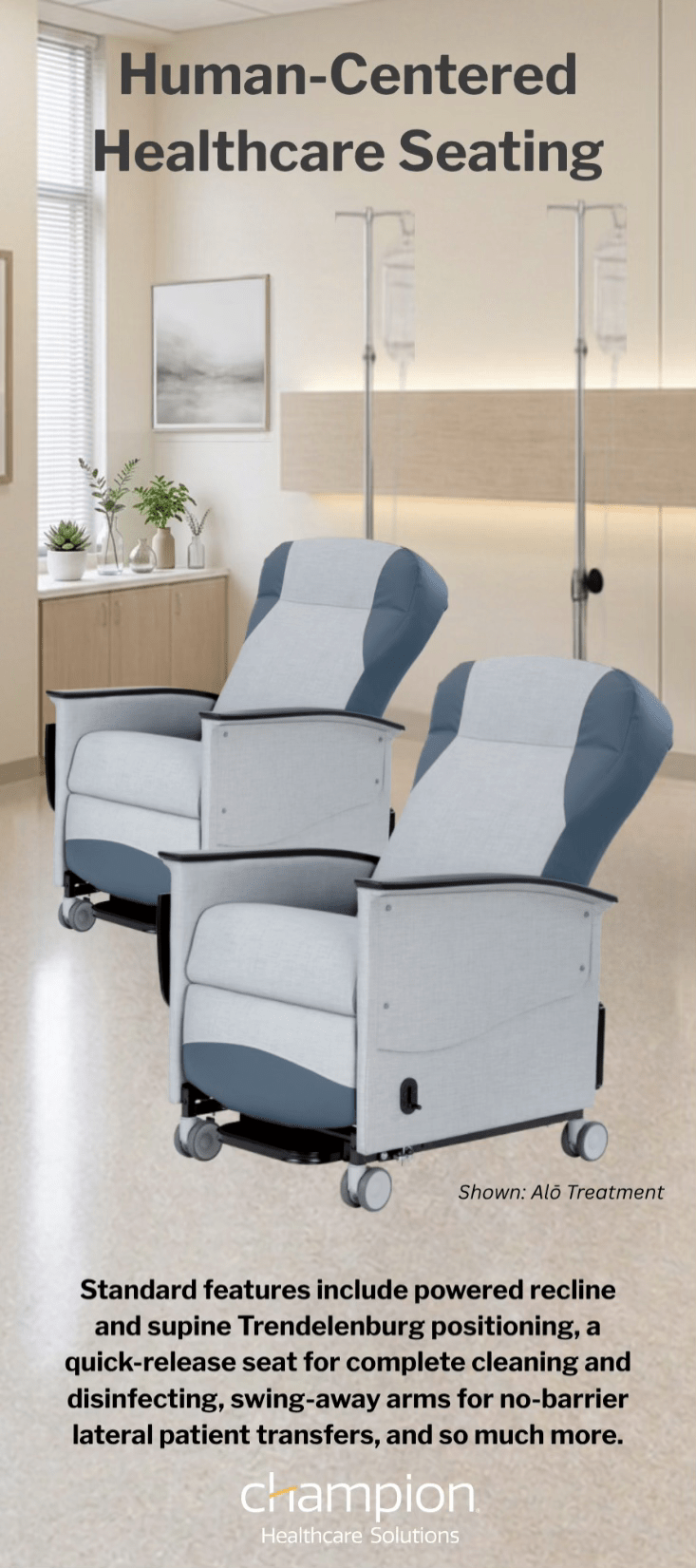
The Future of Smart Healthcare Seating Is Human-Centered
As healthcare facilities evaluate furniture for treatment spaces, recovery rooms, infusion areas, and patient rooms, it can be tempting to define innovation by the longest feature list. But healthcare furniture recommendations increasingly point toward adaptable, human-centered spaces rather than complexity for its own sake.
In many care settings, the most valuable innovations are the ones patients immediately understand and use.
- A button that helps someone sit up.
- A control that helps someone recline.
- A chair that makes it easier to rest without feeling trapped in one position.
That is smart seating without overcomplication. It focuses on functionality that supports comfort, agency, independence, and dignity. It recognizes that healthcare seating does not need to become a technology platform to be meaningful. It needs to help the patient feel supported in the moments that matter.
In the end, the future of healthcare seating is not about adding complexity to the room. It is about adding comfort, control, and confidence for the person who needs it most.
Champion Medical Recliners Are the Right Kind of Smart
At Champion Healthcare Solutions, we believe patient seating should do more than fill a space. It should support the people who rely on it through moments of treatment, recovery, rest, and reassurance. Our Alō Treatment and Alō Recovery recliners are designed with that patient-first mindset, offering comfort controls that help individuals adjust their position, preserve independence, and feel more supported throughout the care experience.
When comfort is easier to access, care can feel more personal, more dignified, and more human. To learn more about how Alō Treatment and Recovery recliners can help create patient-centered spaces that prioritize comfort, control, and confidence, connect with Champion Healthcare Solutions today.