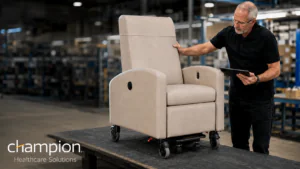
When a healthcare facility purchases seating for a hospital floor, infusion suite, dialysis center, or procedure room, the decision is about more than the chair itself. It is about the quality system behind it.
A medical chair may look durable on the outside, but healthcare environments require more than appearance. Facilities need seating that is built consistently, tested thoroughly, documented properly, and supported by a manufacturer that understands the responsibilities that come with medical device manufacturing. That is where a medical device quality management system matters.
A strong quality management system helps ensure every product is designed, built, tested, and tracked according to defined standards. For healthcare buyers, that translates into confidence: confidence in the chair, confidence in the manufacturer, and confidence that the product is built for the realities of clinical care.
What Is a Medical Device Quality Management System?
A medical device quality management system is the documented framework a manufacturer uses to control how products are designed, manufactured, inspected, tested, and maintained over time.
In simpler terms, it is the process that helps make sure every chair leaving the production floor is built the right way, to the right specifications, every time.
For clinical seating, that consistency matters. Chairs used in healthcare settings support patients, caregivers, treatment workflows, infection prevention efforts, and long-term facility operations. Quality cannot be added at the end of production. It has to be built into the process from the beginning.
At Champion Healthcare Solutions, our medical seating products are built with that discipline in mind. From engineering and production to testing and support, quality is not treated as a final inspection step. It is part of how the product is created.
Why QMS Standards Matter in Healthcare Procurement
Not every furniture manufacturer operates under the same standards. That distinction is important for healthcare buyers.
General quality standards, such as ISO 9001, focus on broad business quality practices. Medical device quality standards go further. ISO 13485:2016 is specific to medical devices and includes risk-based controls, documentation requirements, supplier oversight, traceability, and processes designed around patient and user safety.
For healthcare facilities, ISO 13485 signals that a manufacturer is operating with medical-specific quality discipline, not simply general manufacturing quality.
In the United States, the FDA also regulates medical device manufacturers through its Quality System Regulation, now transitioning to the Quality Management System Regulation, or QMSR. This transition aligns U.S. requirements more closely with ISO 13485 and reinforces the need for strong documentation, production controls, and quality oversight.
For medical seating buyers, these standards help answer an important question:
Is this supplier built to support healthcare environments, or are they simply selling furniture into healthcare spaces?
FDA Medical Device Manufacturer Registration: A Baseline Trust Signal
Many patient seating products are classified as Class I medical devices. For U.S. manufacturers, that means FDA establishment registration and device listing are important baseline compliance steps.
FDA medical device manufacturer registration identifies who the manufacturer is and where products are made. Device listing identifies the specific products being produced.
For buyers, this is a basic trust signal worth verifying. A legitimate medical device manufacturer should be able to provide clear information about its registration status and product listings.
This matters because supplier quality issues can escalate quickly. Recent FDA warning letters involving toxic bacteria contamination at major suppliers show how closely quality, documentation, and patient safety are connected.
A strong QMS helps support the records, validations, controls, and traceability the FDA expects. When a vendor cannot clearly explain or verify its quality and registration status, that should raise questions during the purchasing process.
What a Strong QMS Should Include
A compliant quality system is not one checklist. It is a connected structure of processes that work together to reduce risk, improve consistency, and create accountability.
Key components include:
- Document control – Every procedure, specification, drawing, and revision must be controlled so the correct information is used throughout production.
- Corrective and preventive action, or CAPA – When an issue is found, CAPA helps identify the cause, correct the problem, and prevent it from happening again.
- Risk management – Potential hazards are identified and addressed before a product is released into the field.
- Design controls – Product requirements, engineering decisions, testing, validation, and approvals are documented from concept through release.
- Supplier oversight – Materials and components are evaluated for consistency, quality, and reliability.
- Traceability – Finished products can be connected back to production records, materials, testing, and process documentation.
Together, these elements create a quality chain. They help ensure the product a facility receives is not only well designed, but also consistently manufactured and supported.
How Design Controls Apply to Medical Seating
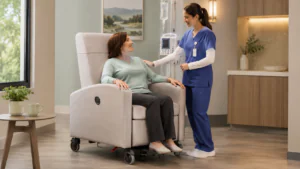
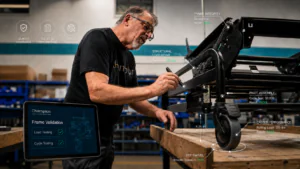
Design controls are where quality becomes visible in the finished product. For an all-steel medical recliner, that may include validating frame strength, weld integrity, weight capacity, and cycle endurance. For a procedure chair, it may include evaluating patient positioning, caregiver access, stability, and movement through clinical workflows.
These details matter because seating failure in a healthcare environment is not just an inconvenience. It can affect patient safety, caregiver strain, treatment delays, room turnover, and operational efficiency. Features such as Trendelenburg positioning, swing arms, cleanable surfaces, and durable frames must be evaluated through a disciplined design and risk management process. Whether the chair is used in dialysis, infusion, oncology, or a procedure room, buyers should expect documentation and testing behind the design.
How Quality Systems Protect Patients and Care Teams
A quality management system is not paperwork for paperwork’s sake. It directly supports the people using the equipment every day. When clinical seating is not properly designed, tested, or manufactured, the impact can show up in several ways. Patients may feel less secure. Caregivers may struggle with transfers or access. Facilities may experience more maintenance issues, downtime, or replacement costs.
A rigorous QMS helps reduce those risks by validating performance before the product reaches the care environment. Quality also supports infection prevention. Cleanable, non-porous surfaces and appropriate material selection are important in healthcare spaces, especially where patients may spend long periods of time in the same chair. Quality systems help ensure those specifications are defined, controlled, and repeated consistently.
The same applies to caregiver ergonomics. A chair that supports easier access, safer positioning, and smoother workflows can help reduce unnecessary strain on staff. We discuss this further in our article on designing medical chairs with caregiver ergonomics in mind. In short, quality systems help make clinical seating more dependable for patients, caregivers, and facilities.
How to Evaluate a Medical Device Seating Supplier
When comparing suppliers, buyers should look beyond product images, spec sheets, and price.
The stronger question is: Can this manufacturer prove how quality is controlled?
Before making a purchasing decision, ask:
- Can the supplier provide a current ISO 13485 certificate? – This helps confirm medical device quality system certification through an accredited body.
- Is the supplier registered with the FDA, and are its devices listed? – Registration and device listing should be verifiable.
- Can the supplier provide validation or testing documentation? – For clinical seating, this may include frame testing, load capacity, cycle testing, and other product-specific documentation.
- How does the supplier handle quality issues? – Ask about corrective actions, service support, warranty coverage, and how feedback is tracked.
- Where are the products built? – Domestic production can support stronger oversight, shorter lead times, and more direct accountability.
These questions are part of responsible healthcare procurement. They are also connected to broader supply chain decisions in healthcare, where reliability, transparency, and support matter long after the purchase order is placed.
What Quality Standards Signal About a Manufacturer
A certified medical device manufacturer signals more than compliance. It signals discipline. It shows that the manufacturer has defined processes, documented controls, trained teams, supplier oversight, and a commitment to continuous improvement. It also shows that quality is part of the company’s operating structure, not something added only for a bid response.
That reliability matters in specialty care environments, including oncology, infusion, dialysis, labor and delivery, ambulatory surgery, and other clinical spaces where seating is used daily and heavily. When a chair fails, the disruption is immediate. When a chair performs reliably, it supports the treatment experience quietly and consistently. That is the value of working with a manufacturer that treats quality as a permanent standard.
The Champion Approach to Quality
At Champion Healthcare Solutions, quality is built into how we design, manufacture, and support medical seating. Our focus is simple: create durable, dependable clinical seating that supports patients, caregivers, and the facilities that rely on it every day.
That means engineering products for real healthcare use. It means building with materials designed for demanding environments. It means maintaining documentation, traceability, and process control. It also means standing behind our products with clear warranty support and responsive service. As a U.S.-based manufacturer, Champion also understands the importance of accountability. The value of made-in-the-USA infusion and clinical seating shows up in quality oversight, lead times, communication, and long-term support.
For healthcare buyers, the chair is only part of the decision. The manufacturer behind the chair matters just as much.
Choosing Seating Built for Clinical Confidence
A medical device quality management system may not be the first thing buyers notice when evaluating clinical seating. But it should be one of the most important.
- It tells you how the product is controlled.
- It tells you how risk is managed.
- It tells you whether the manufacturer is prepared to support healthcare environments with the discipline they require.
When seating plays a role in patient comfort, caregiver access, infection prevention, and daily treatment workflows, quality cannot be assumed. It has to be proven. To see how Champion seating can support your clinical space, build your chair or connect with a Champion representative.
Frequently Asked Questions
Why does a medical device quality management system matter?
A medical device quality management system helps ensure products are designed, manufactured, tested, and documented consistently. For healthcare buyers, that means greater confidence in product safety, durability, compliance, and long-term performance.
Is FDA medical device manufacturer registration required?
Yes. U.S. companies that produce medical devices, including many patient seating products, are required to complete establishment registration and device listing with the FDA. Buyers should be able to verify this information when evaluating a supplier.
How do I verify a medical device supplier’s quality system?
Ask for a current ISO 13485 certificate, confirm FDA registration and device listing, and request relevant validation or testing documentation. A reputable supplier should be prepared to provide evidence of its quality processes.