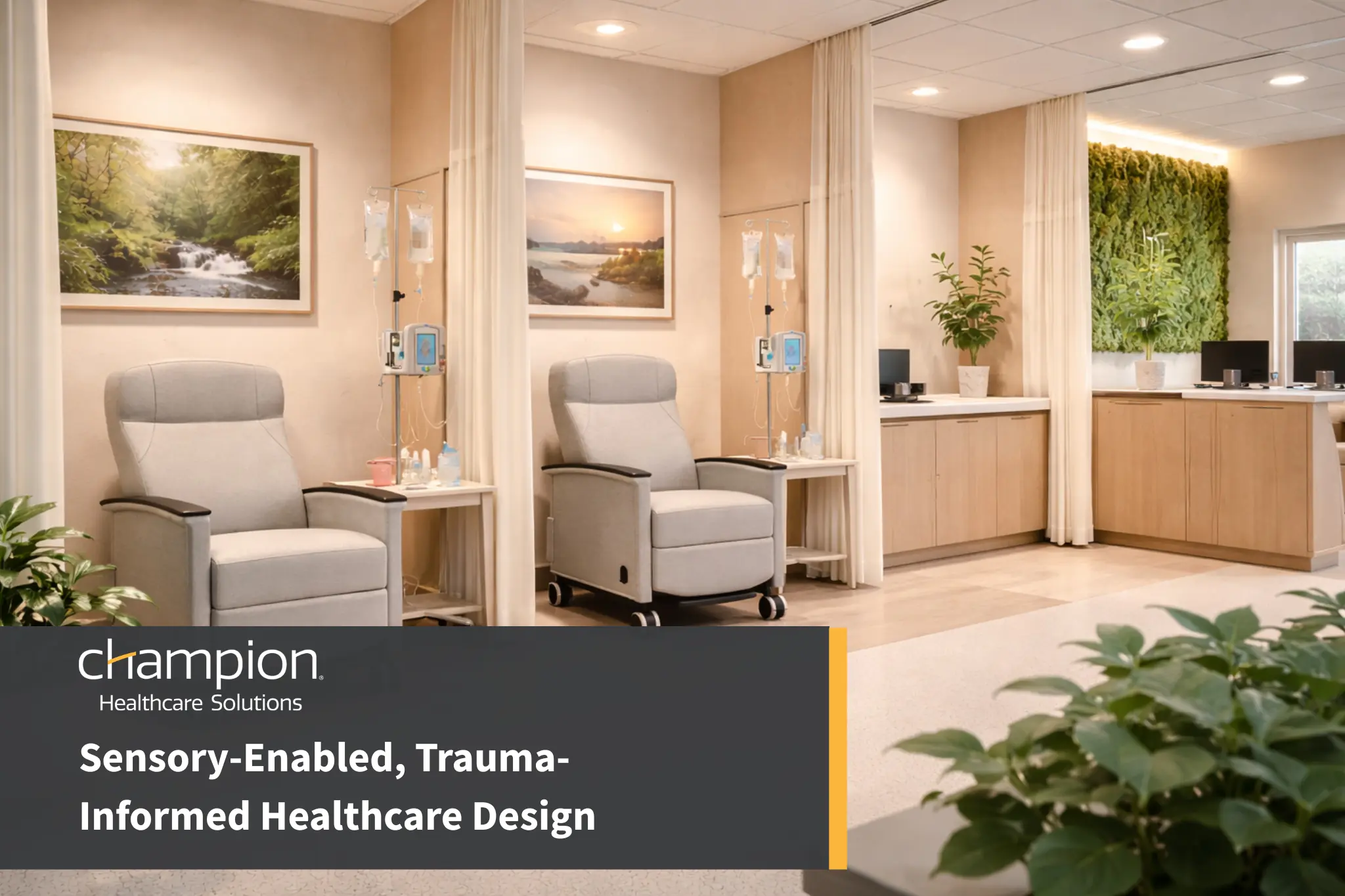
A specifier’s guide to seating and fabrics that actually hold up
Healthcare teams are asking for spaces that feel calmer, more human, and more supportive—especially in settings where patients may feel overwhelmed. Designers are responding with warmer palettes, softer textures, biophilic cues, and “choice-and-control” features that reduce friction for both patients and staff.
Operations teams, however, live in a different reality. They’re managing frequent cleaning cycles, rapid turnover, and the everyday wear that comes with high utilization. When furniture and finishes don’t hold up, the space stops performing—fast.
This guide is for architects, interior designers, and specifiers who want to deliver sensory-enabled, trauma-informed environments while still meeting the non-negotiables of maintenance, infection prevention workflows, and lifecycle value.
What “sensory-enabled” really means in real facilities
Sensory-enabled design isn’t about making healthcare look like a hotel. It’s about creating an environment that reduces unnecessary stressors and supports predictable, dignified experiences.
In practice, that often includes:
- Reduced visual clutter (fewer competing materials/patterns, cleaner sightlines)
- Soft but durable textures that don’t feel “plastic”
- Lighting that’s gentle and controllable (avoiding harsh glare where possible)
- Clear wayfinding that reduces cognitive load
- Choices for comfort and control (supportive seating, intuitive adjustments, personal space boundaries)
Trauma-informed design builds on this: spaces should feel safe, respectful, and easy to navigate—without surprises. That’s where furniture and finishes can either support the intent… or undermine it.
The specifier’s tension: hospitality feel vs. healthcare realities
Here’s the challenge A&D teams face every day: the chair that looks perfect in a rendering can become the “problem item” six months after opening if it’s hard to clean, prone to damage, or mismatched to real workflows.
Most furniture frustrations are not aesthetic failures. They’re operational mismatches. When cleaning has to happen frequently, high-touch zones need to be accessible, surfaces need to tolerate routine disinfecting, and components need to hold up under daily use.
That’s why the best specs run on two parallel tracks. One track protects design intent—calm, welcoming, supportive. The other protects operational intent—cleanable, durable, consistent, maintainable. A successful project needs both.
A practical framework for specifying seating and fabrics
A simple way to keep decisions aligned is to define four “profiles” early in the process. These profiles make it easier to choose seating and upholstery that support the experience you’re designing and the reality the facility will run.
Start with the user profile. Who will use the seating, and for how long? A fifteen-minute sit and a three-hour therapy session place very different demands on comfort, adjustability, and perceived warmth. Mobility considerations matter too, especially in spaces where patients may need assistance getting in and out of seating.
Next is the cleaning profile. How often will the chair be cleaned in this specific setting? What products are used, and who is responsible for cleaning between users? Cleaning protocols are typically consistent on paper, but highly variable in practice. If a chair is difficult to wipe thoroughly and consistently, the “best” material on a datasheet can become the worst real-world choice.
Then define the durability profile. What does “high use” look like here? Is the chair moved frequently? Do accessories and side tables get used heavily? Are casters, arms, controls, and edges likely to take the brunt of daily wear? Furniture cleanability and durability go hand-in-hand because breakdown points become harder to clean and harder to keep looking “new.”
Finally, clarify the aesthetics profile. What does “calm” look like for this brand and population? Sensory-enabled spaces often benefit from visual quiet—fewer, better materials used consistently. Upholstery is a large field of view, and in long-dwell spaces it can become overstimulating if the pattern or texture is too busy.
These four profiles keep conversations grounded and help prevent late-stage substitution that dilutes both performance and experience.
Seating that supports trauma-informed goals—while making operations easier
Seating is one of the most “felt” elements in a space. It can deliver comfort, autonomy, and dignity—while also supporting staff efficiency.
When you’re selecting recliners for treatment, recovery, or long-dwell outpatient settings, look for features that align with both design and operations:
Comfort and choice (patient experience)
- Supportive cushioning and pressure-friendly ergonomics for longer sits
- Intuitive controls (easy to understand, easy to reach)
- Options that help patients settle in without feeling “trapped” or precarious
Ease of care (workflow)
- Swing-away arms for simpler ingress/egress and easier lateral transfers
- Stable positioning and thoughtful clearances for staff access
- Replaceable or service-friendly components that reduce downtime
Cleanability (environment of care)
- Construction and surfaces that are easier to wipe consistently
- Reduced nooks/crevices where soil can collect
- Upholstery options that support low-level disinfection routines
Where Champion fits in A&D specifications
Alō Treatment: Premium treatment seating designed for clinical environments with standard features that support functionality and cleanability.
Alō Recovery: Similar premium design language with a lower working height than Alō Treatment for patients and caregivers alike—useful for recovery workflows.
Ascent / Ascent II: Upscale aesthetic with subtle curves and swing-away arms—an approachable “hospitality-forward” look with practical features for longer seated therapies.
Fabric selection: how to spec “soft” without creating a cleaning headache
The goal is not “the softest fabric.” The goal is the right performance covering for the cleaning intensity and experience you’re designing.
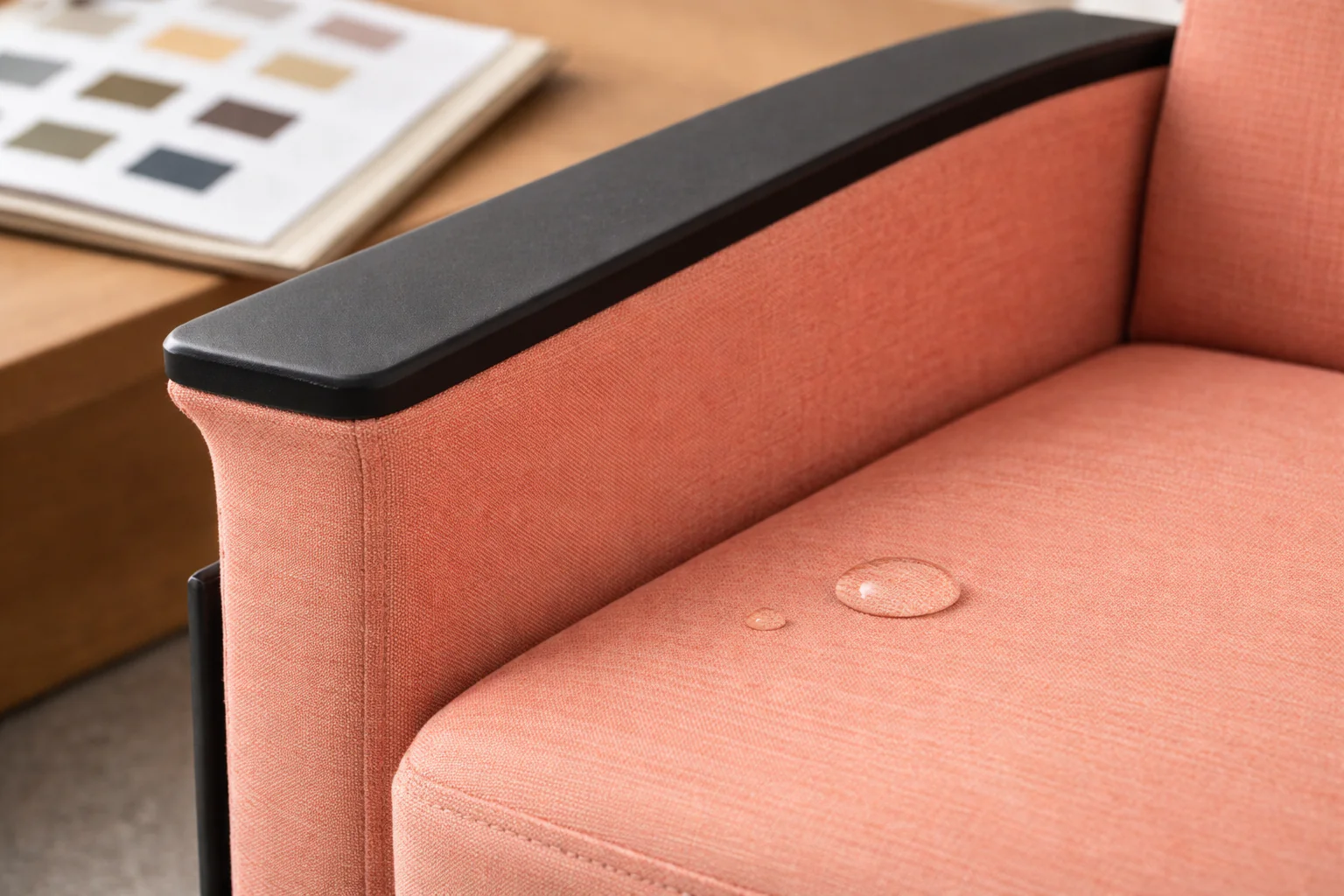
In many projects, design teams want a textile-forward look and hand so the environment feels less institutional. The risk is that a “residential-feeling” selection may not tolerate the cleaning frequency or products used in the setting. That’s when chairs start looking tired early, seams show stress, and the space loses its intended feel.)
Champion’s fabric options help bridge that gap. Secura is built to deliver a luxury woven look with a soft hand while still supporting durability expectations in healthcare environments by offering an antibacterial agent that kills harmful bacteria. It’s a strong option when your design intent calls for warmth and comfort, but the operational reality is frequent cleaning and heavy use.
Champion’s Premium fabric selections expand aesthetic flexibility while keeping the spec anchored in healthcare performance needs. The benefit to specifiers is consistency across spaces and chair models, which supports visual calm and reduces unintended variation.
A practical rule is to decide early where you want visual quiet. Upholstery is “background” and “foreground” at the same time. In sensory-enabled spaces, calmer often comes from fewer patterns and more consistency—paired with intentional accents elsewhere.
Protect the design intent from substitution risk
Furniture substitution is one of the easiest ways for a trauma-informed concept to erode. A lower-cost look-alike can change how surfaces feel to patients, how easily staff can clean, and how quickly high-touch areas wear.
That’s why specs should protect performance, not just appearance. “Looks similar” is not a functional requirement. A better approach is to define must-have characteristics tied to your four profiles: cleaning compatibility, durability in known wear zones, serviceability expectations, and functional needs related to workflow.
If you’re building trauma-informed principles into the project, it helps to keep those principles visible during submittal review and value engineering.
Read More “Involving Stakeholders in the Healthcare Design Process”
A quick stakeholder alignment approach (without turning it into a committee)
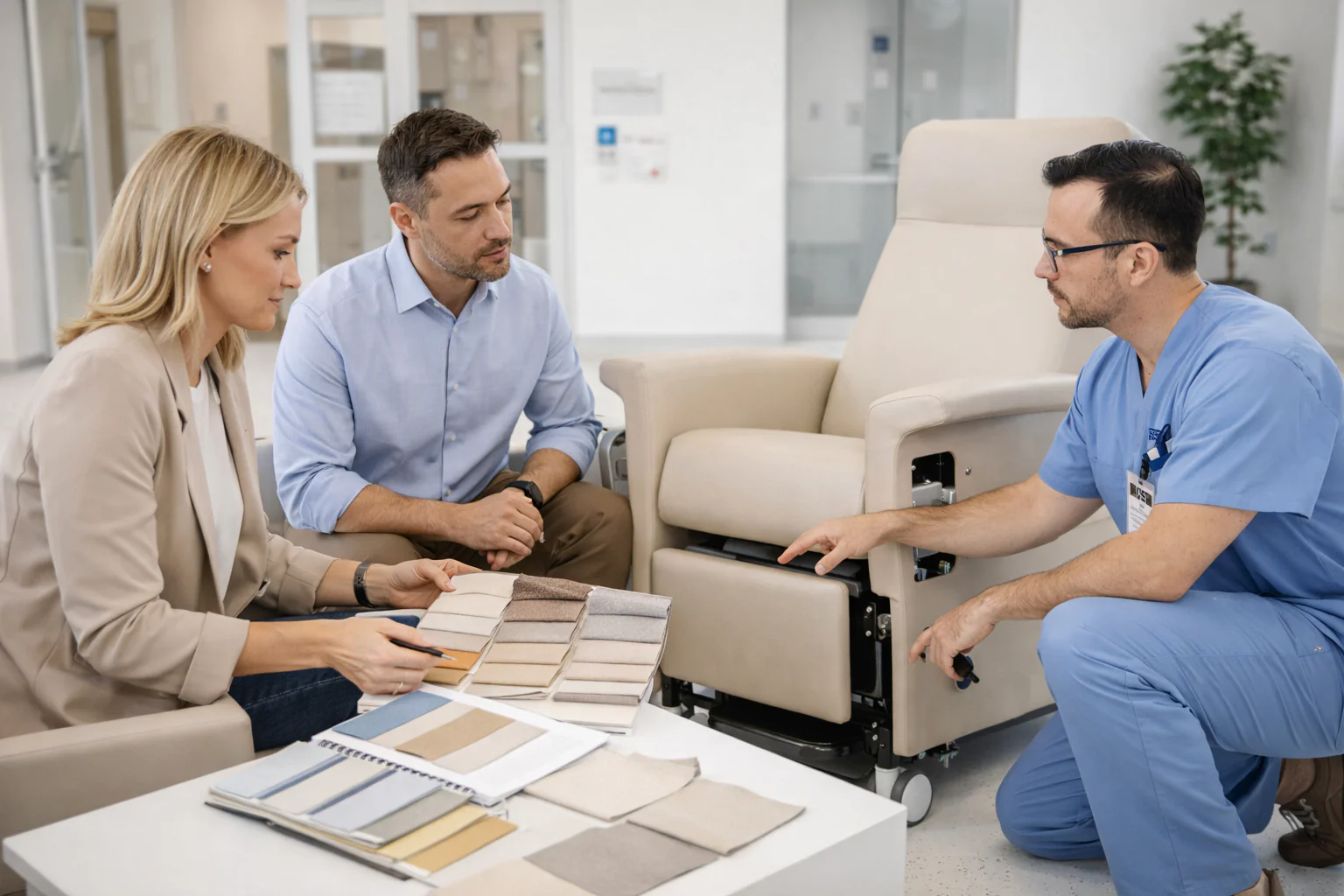 You don’t need a lengthy process to gain clarity. A short, focused review can surface issues before they become field problems.
EVS and infection prevention can clarify what cleaning looks like in real life, not just in policy. Nursing and operations can identify where “help moments” tend to create delays. Facilities can tell you what fails first, how repairs are handled, and what downtime is acceptable. Design can translate those realities into choices that preserve the intended experience.
This is how you avoid the common pattern where the space opens beautifully and then slowly drifts as operational workarounds appear.
Pulling it together: calm, durable, and ready for real operations
A sensory-enabled, trauma-informed environment only works if it holds up to real operations.
When you spec seating and fabrics, align early using the user, cleaning, durability, and aesthetics profiles. Choose upholstery that supports the facility’s cleaning reality while still delivering the feel you’re designing for. Select seating with features that protect dignity and autonomy for patients and reduce friction for staff.
Champion can help you align chair selection and fabric packages to your setting’s operational constraints while delivering the warm, welcoming experience your teams are designing for. To see how a Champion chair looks with your favorite fabrics and finishes explore our chair configurator to match your space’s utilization and experience goals.